


|
|
|
01 Préface
Dix ans d’engagement commun pour l’économie circulaire.
Cette année marque une étape importante pour PV CYCLE Belgium : il y a dix ans (le 29 avril 2016), l’organisation a été fondée avec une ambition claire : veiller à ce que les panneaux solaires en Belgique ne produisent pas seulement de l’énergie durable, mais soient également collectés et recyclés de manière responsable à la fin de leur durée de vie.
Dix ans plus tard, force est de constater que ce système s’est solidement ancré dans le paysage. Ce qui avait commencé avec un nombre limité d’entreprises affiliées est devenu une initiative sectorielle largement soutenue. Les fabricants assument leurs responsabilités, et de plus en plus d’installateurs et d’utilisateurs finaux trouvent le chemin vers les canaux de collecte appropriés. Cet effort commun constitue la base des résultats que nous obtenons aujourd’hui.
L’année 2025 confirme par ailleurs une tendance qui s’est nettement affirmée au cours des dernières années : les volumes de panneaux solaires mis au rebut continuent de croître.
Avec 1 785 tonnes de panneaux collectés, nous atteignons à nouveau un record. Il ne s’agit pas d’un pic temporaire, mais d’une évolution structurelle. Les premières générations de panneaux solaires arrivent en fin de vie et cèdent la place à des installations plus efficaces. Ce flux va encore s’intensifier dans les années à venir.
Cette croissance exige un système à la fois performant et souple. En 2025, le réseau de collecte a encore été renforcé et, là où cela s’est avéré nécessaire, des capacités de recyclage supplémentaires ont été déployées. En étroite collaboration avec nos partenaires opérationnels, nous continuons ainsi à garantir un traitement fiable et de qualité pour l’ensemble des panneaux collectés.
Cet anniversaire est également marqué par un tournant majeur sur le plan politique. L’accord de coopération interrégional sur la responsabilité élargie des producteurs a été approuvé dans les trois régions. Même si tous les aspects de cet accord ne sont pas encore tout à fait clairs, l’objectif est bien d’évoluer vers un nouveau cadre harmonisé à l’échelle interrégionale. Ce nouveau cadre confirme sans aucun doute l’importance des systèmes collectifs tels que PV CYCLE Belgium.
Les dix dernières années ont démontré la force de la coopération. Les dix prochaines s’annoncent sous le signe de la montée en puissance: des volumes en hausse, des exigences renforcées et un besoin croissant d’un système à la fois efficace et transparent. Avec nos entreprises affiliées, nos partenaires et les pouvoirs publics, nous demeurons résolument engagés à relever ce défi.
Nous remercions toutes les entreprises affiliées, les autorités publiques et les autres parties prenantes pour leur engagement et leur confiance envers PV CYCLE Belgium.
Ensemble, nous veillons à ce que les panneaux photovoltaïques contribuent non seulement à l’énergie renouvelable pendant leur utilisation, mais soient également traités de manière responsable en fin de vie.
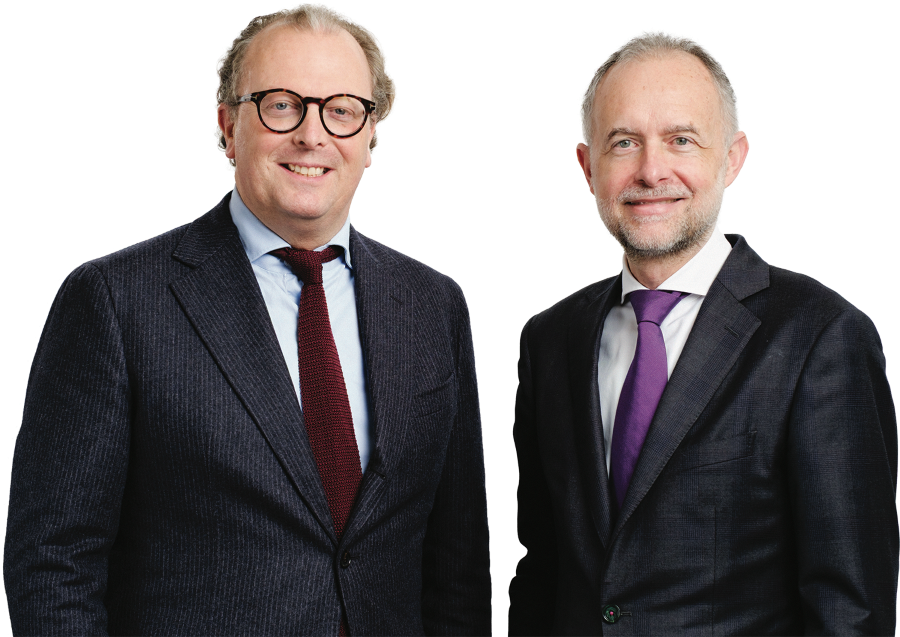
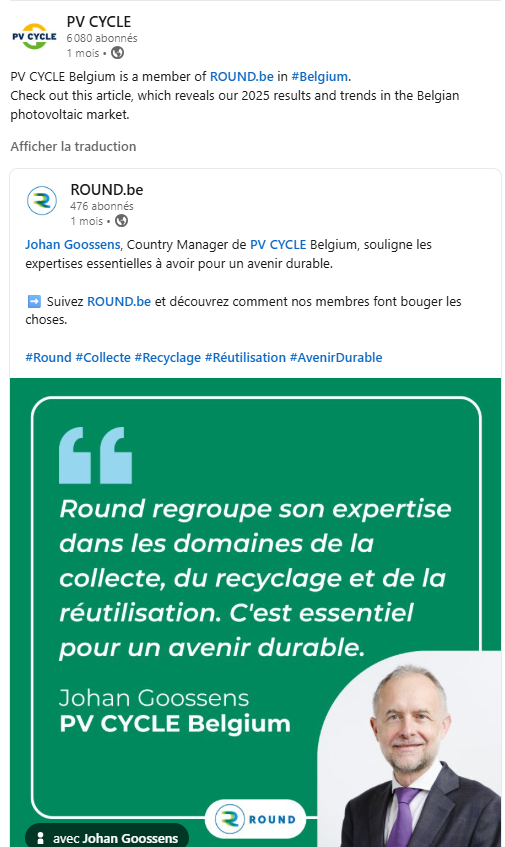
Johan Goossens – Country Manager Belgium
Steven Leeten – Président
|
|
|
02Panneaux photovoltaïques mis sur le marché
Une décennie de responsabilité des producteurs
Il y a dix ans, 92 entreprises avaient rejoint PV CYCLE Belgium. Elles sont aujourd’hui 435, soit près de cinq fois plus — une progression qui témoigne de l’essor du marché belge de l’énergie solaire. Les nouveaux acteurs qui commercialisent des panneaux choisissent le système collectif comme moyen le plus efficace de respecter leurs obligations légales. Le groupe d’entreprises affiliées continue ainsi d’évoluer au rythme du secteur.
L’évolution du nombre de panneaux déclarés retrace l’histoire de dix ans d’énergie solaire en Belgique : d’un démarrage modeste à une période de forte croissance, avec un pic en 2023 suivi d’un ralentissement. Ces fluctuations sont inhérentes au marché. Les variations des prix de l’énergie, les mesures fiscales et la baisse du coût des panneaux photovoltaïques ont eu, ces dernières années, un impact direct sur le rythme des installations — et continueront de le faire à l’avenir.
Nouveauté en 2025 : les panneaux solaires avec prise
Depuis 2025, les panneaux solaires avec prise (également appelés plug-in panels) sont autorisés sur le marché belge. Ces systèmes, qui se branchent simplement sur une prise de courant, rendent l’énergie solaire accessible à un public plus large.
L’impact reste, à ce stade, limité : en 2025, quelque 14 000 panneaux solaires enfichables ont été déclarés auprès de PV CYCLE Belgium. Il ne s’agit pas encore d’une véritable percée, mais ils illustrent clairement l’émergence sur le marché de nouvelles applications plus accessibles.
|
|
|
03Résultats opérationnels
Un réseau de collecte performant
En collaboration avec nos partenaires, nous continuons à développer un réseau dense pour la collecte des panneaux photovoltaïques usagés. Fin 2025, PV CYCLE Belgium comptait 102 points de collecte répartis dans tout le pays (62 en Flandre, 38 en Wallonie et 2 à Bruxelles). Cela représente une légère croissance par rapport à 2024. Ces points de collecte — souvent des entreprises du secteur lui-même — jouent un rôle crucial en offrant un lieu de dépôt pour de petites quantités de panneaux.
Pour les volumes plus importants, à partir d’environ 40 panneaux, PV CYCLE Belgium organise une collecte sur place. Ce deuxième canal reste essentiel lors du démantèlement d’installations plus importantes.
En 2025, on observe une évolution notable des flux de collecte. Environ 30 % des panneaux collectés ont été apportés via des points de collecte, contre 70 % via des collectes sur site. En utilisant ces deux canaux de collecte de manière complémentaire, nous garantissons que les panneaux photovoltaïques mis au rebut sont collectés efficacement — quels que soient leur volume ou leur emplacement — et qu’ils sont acheminés à bon port afin d’être recyclés.
Les points de collecte

Quantités collectées : la croissance se poursuit
En 2025, la forte croissance des quantités collectées s'est poursuivie. Au total, PV CYCLE Belgium a collecté 1 785 tonnes, contre 1 491 tonnes en 2024. L'année 2025 confirme ainsi la nette tendance à la hausse observée ces dernières années.
Cette évolution témoigne du développement continu d'un marché de remplacement. De plus en plus d'installations arrivent en fin de vie et cèdent la place à des systèmes plus efficaces, tant dans le secteur résidentiel que dans les applications à plus grande échelle. L'augmentation des volumes donne donc une indication de ce à quoi il faut s'attendre dans les années à venir.
La Flandre continue de représenter la plus grande part, mais les volumes collectés augmentent également en Wallonie et à Bruxelles. La collecte devient ainsi progressivement une réalité dans toute la Belgique.
Traitement par plusieurs partenaires de recyclage
Un traitement de qualité des panneaux photovoltaïques mis au rebut reste un aspect crucial de la responsabilité des producteurs, dont PV CYCLE Belgium se porte garant. En 2025, les panneaux collectés ont été traités par un ensemble de partenaires, avec un rôle important joué par BNE Trading & Recycling et le consortium Comet/Recma, complétés par d’autres transformateurs.
En raison de difficultés opérationnelles chez BNE, il a fallu faire appel à des capacités de recyclage supplémentaires à la fin de l’année. Concrètement, une collaboration a été mise en place avec Galloo (Menen) et Mirec (Eindhoven). Ces partenaires ont permis de continuer à traiter tous les panneaux photovoltaïques collectés sans interruption.
Une petite partie des panneaux collectés est constituée de panneaux CIGS, dont la composition diffère de celle des panneaux classiques en silicium. Ces flux sont traités par Lohmann (Allemagne).
La répartition entre plusieurs partenaires de recyclage illustre l’importance de la flexibilité sur un marché en rapide évolution et garantit la continuité du service. Elle démontre également qu’il existe une capacité et une expertise suffisantes pour absorber le flux croissant de panneaux photovoltaïques mis au rebut.
En 2026, PV CYCLE Belgium remettra les contrats de traitement sur le marché via un appel d’offres, dans le but de continuer à compter sur un traitement stable, efficace et tourné vers l’avenir. En collaboration avec nos partenaires, nous veillons ainsi à ce que les panneaux photovoltaïques mis au rebut soient recyclés de manière qualitative et que leurs matériaux soient réintroduits dans l’économie.
.svg)
|
|
|
04Durabilité
Du recyclage à un impact mesurable
La durabilité est au cœur de la mission de PV CYCLE Belgium. En assurant la collecte et le recyclage corrects des panneaux photovoltaïques en fin de vie, nous veillons à ce que des matériaux précieux puissent être réutilisés, ce qui contribue à réduire l’impact environnemental.
En 2025, PV CYCLE a franchi une étape importante dans la professionnalisation de son approche en matière de durabilité. Deux fonctions spécifiques ont été créées : un Sustainability & Regulatory Affairs Manager et un Circularity Manager.
Une analyse de matérialité a été réalisée afin d’identifier les thématiques de durabilité les plus pertinentes pour nos activités. Il en ressort que la circularité et le changement climatique constituent les principales priorités. D’autres thématiques, telles que l’éthique des affaires, la protection des données, la santé et la sécurité, la gestion responsable de la chaîne de valeur et l’innovation, font également l’objet d’un suivi.
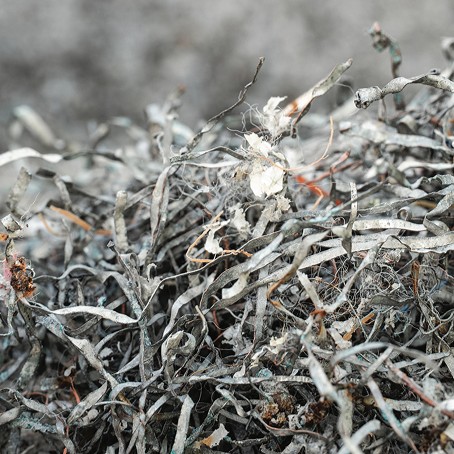
Au cœur des résultats de durabilité de PV CYCLE Belgium figurent bien entendu les résultats du traitement des panneaux. En 2025, les deux principaux partenaires de recyclage — représentant ensemble 93% du volume total — ont atteint conjointement un taux de recyclage de 85,9% et un taux de valorisation de 96,6%. Cela signifie que la grande majorité des matériaux est réutilisée de manière utile, soit comme matières premières secondaires, soit via d’autres formes de valorisation.
L’analyse du recyclage à un impact durable
Pour la première fois, PV CYCLE Belgium a réalisé une analyse du cycle de vie (ACV) de ses activités. Cette analyse évalue l’impact environnemental de la collecte et du traitement des panneaux photovoltaïques en fin de vie, depuis l’enlèvement jusqu’au traitement et à la récupération des matériaux.
Les résultats confirment que la collecte organisée et le recyclage génèrent un bénéfice environnemental net. Pour chaque kilogramme de panneau en silicium cristallin traité, 1,4 kg d’équivalent CO₂ sont évités en moyenne. Rapporté au flux total belge en 2025, cela représente plus de 2.327 tonnes d’équivalent CO₂ évitées, ce qui correspond aux émissions de 660 voitures particulières roulant chacune 15.000 km par an.
À l’inverse, les émissions liées au fonctionnement du système lui-même restent nettement plus limitées. Les émissions résultant de la collecte et de la première étape du traitement se sont élevées, en 2025, à 75,4 tonnes d’équivalent CO₂. Les émissions évitées grâce au recyclage sont donc largement supérieures aux émissions générées par la logistique et le traitement.
L’analyse met également en évidence des effets positifs dans d’autres domaines. La récupération de matériaux tels que l’aluminium, le cuivre et le verre permet d’économiser des matières premières primaires et de l’énergie fossile. Un bénéfice est observé dans toutes les catégories d’impact qui font généralement partie d’une ACV.
L’analyse du cycle de vie fera l’objet d’une publication distincte en 2026.
|
|
|
05Communication
Les dix ans de PV CYCLE Belgium, ce sont aussi dix ans de sensibilisation, grâce à des actions de communication efficaces.
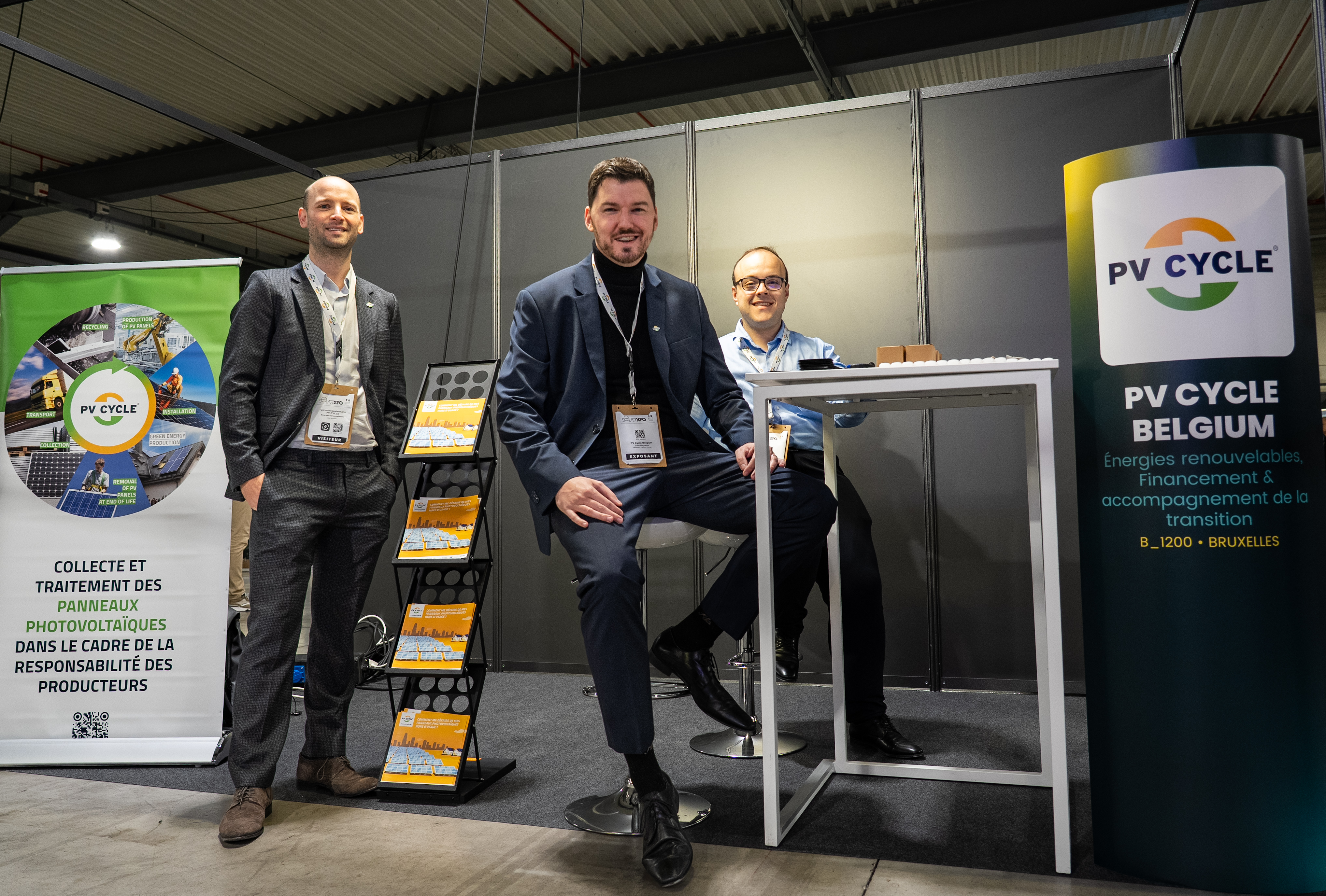
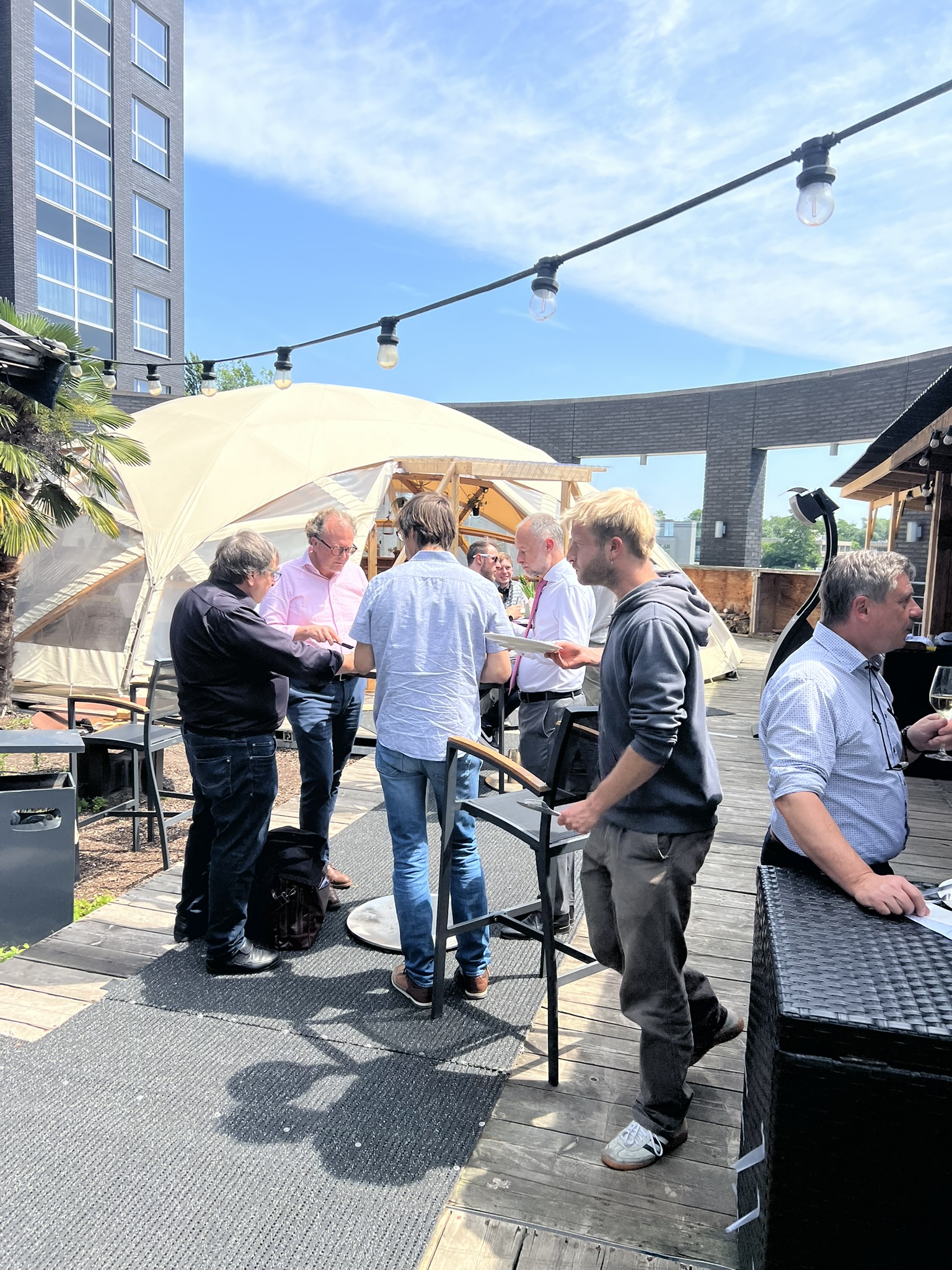
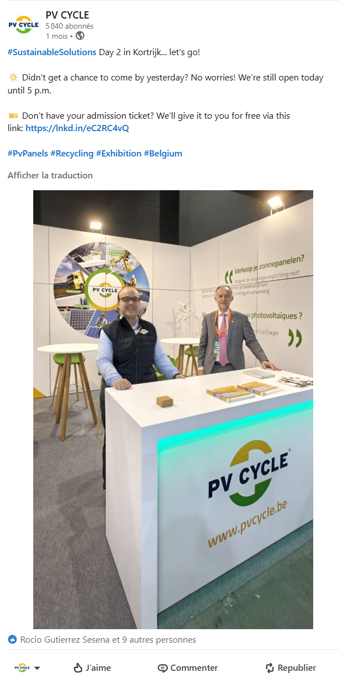
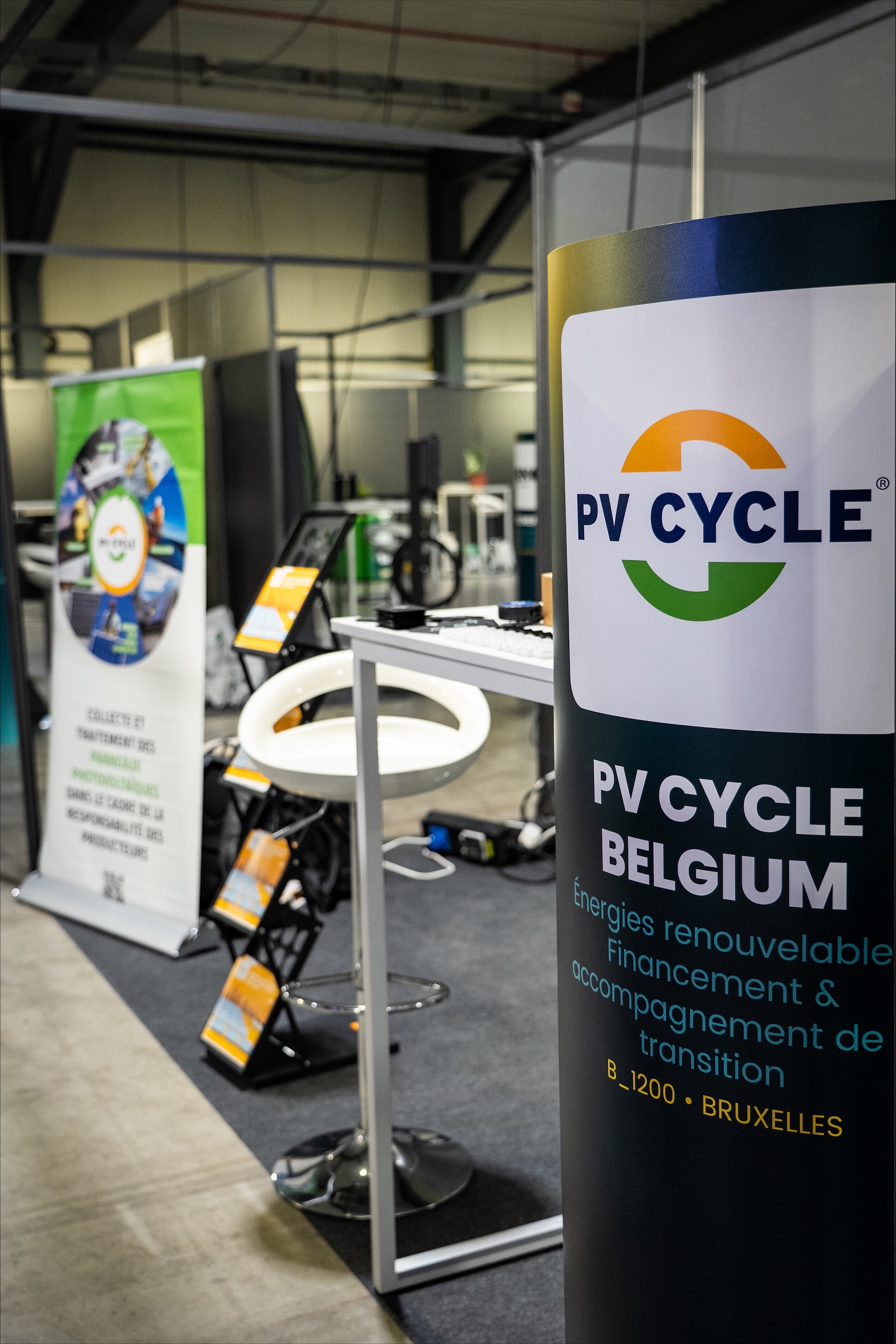
En 2025, PV CYCLE Belgium était à nouveau présent aux principaux salons professionnels du secteur : InterSolution à Gand, Solar Solutions à Courtrai et Solar XPO à Marche-en-Famenne. Cette présence directe reste essentielle : c’est sur le salon que les discussions s’engagent, que les questions trouvent des réponses et que de nouvelles entreprises franchissent le pas pour adhérer.
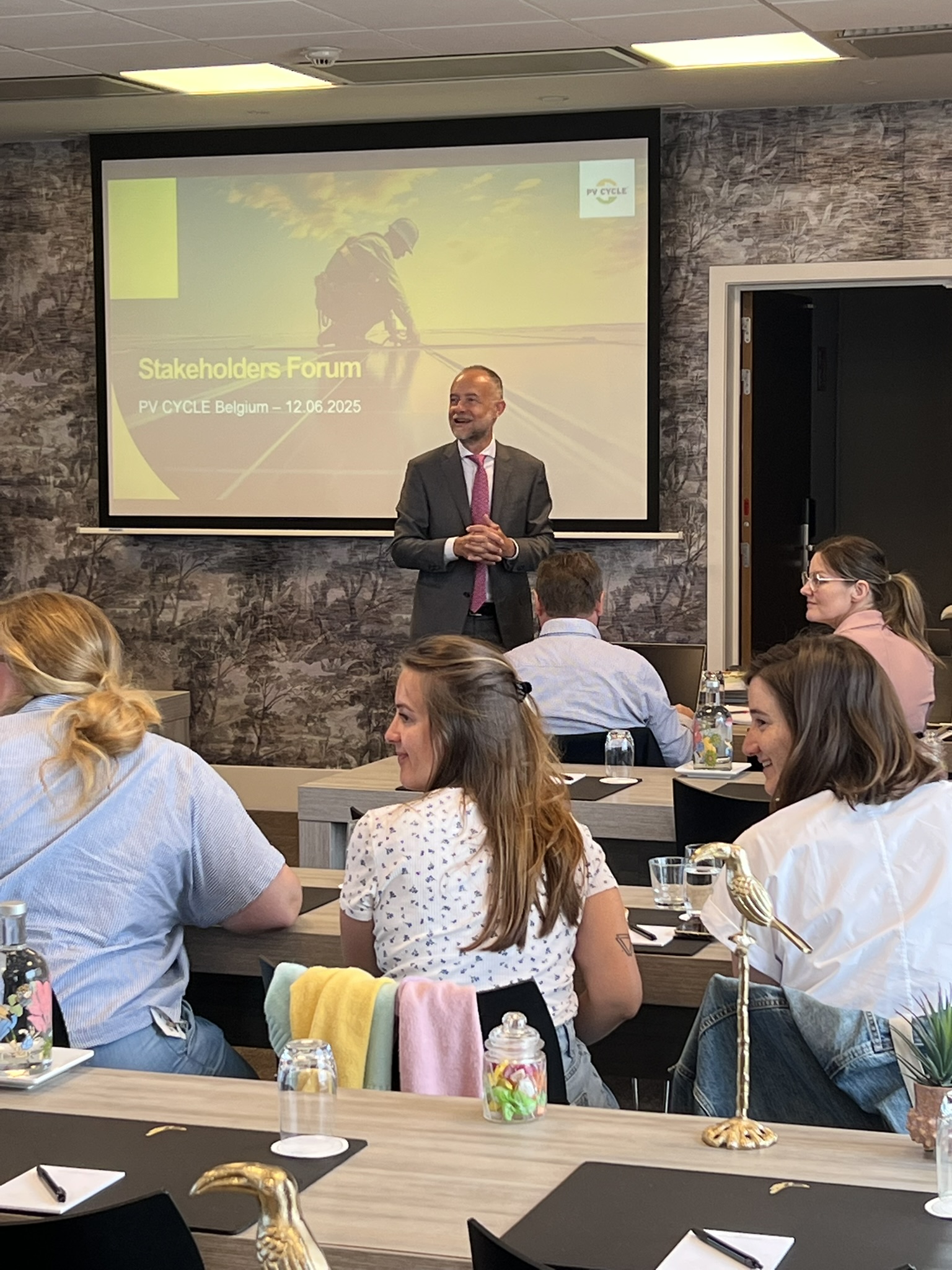
Par ailleurs, l’accent a continué d’être mis sur une communication ciblée via la presse spécialisée, des conférences et nos propres canaux numériques, avec une newsletter régulière et une présence sur LinkedIn qui ne cesse de croître d’année en année. La deuxième édition du Stakeholders Forum, réunissant des représentants d’entreprises affiliées, de fédérations, des pouvoirs publics et des partenaires opérationnels, a également été un succès.
Une communication régulière jouera un rôle de plus en plus essentiel dans les années à venir. La forte augmentation attendue des panneaux mis au rebut exige un taux de collecte maximal — et cela ne sera possible que si chaque maillon de la chaîne connaît et assume son rôle. Pour les fabricants et les importateurs, cela signifie des règles du jeu équitables : quiconque met des panneaux sur le marché contribue à leur recyclage. Pour les particuliers et les professionnels, cela signifie qu’ils doivent trouver le chemin vers les bons canaux de collec te.
Dix ans de communication ciblée ont permis de poser des bases solides afin d’y arriver. Avec nos partenaires, nous continuons à les renforcer afin que les volumes croissants de demain puissent également être collectés et traités de manière efficace.

|
|
|
06Chiffres clés financiers
Les résultats financiers de PV CYCLE Belgium reflètent l’évolution du marché. En 2025, les contributions environnementales perçues se sont élevées à 3,5 millions d’euros, contre 3,9 millions d’euros en 2024. Cette baisse suit le recul du nombre de panneaux photovoltaïques mis sur le marché et confirme la volatilité propre au secteur. La contribution par panneau est restée inchangée .
Parallèlement, les coûts opérationnels ont augmenté. Les dépenses liées à la collecte et au traitement se sont élevées à 313 000 euros, en cohérence avec la progression des volumes collectés et la hausse des coûts de traitement par tonne. Les frais de gestion ont eux aussi augmenté, pour atteindre 430 000 euros, sous l’effet notamment d’une professionnalisation accrue et d’efforts supplémentaires en matière de communication.
Le modèle financier repose sur une approche à long terme, dans laquelle les contributions environnementales ne sont pas dépensées immédiatement, mais sont en partie mises en réserve pour couvrir des coûts futurs. En 2025, 3,1 millions d’euros ont été ajoutés à ces provisions. Ces fonds sont essentiels afin de pouvoir financer la collecte et le traitement des panneaux photovoltaïques lorsque les installations actuelles arriveront en fin de vie.
| 2024 (K EUR) |
2025 (K EUR) |
|
|---|---|---|
| Revenus | ||
| Contributions environnementales | 3 908 | 3 488 |
| Coûts | ||
| Coûts de gestion | 286 | 430 |
| Coûts opérationnels (collecte et traitement) | 267 | 313 |
| Provisions | ||
| Provisions pour les coûts futurs | 5 358 | 3 140 |
|
|
|