


|
|
|
01 Voorwoord
Tien jaar samen circulair
Dit jaar markeert een bijzondere mijlpaal voor PV CYCLE Belgium: tien jaar geleden (op 29 april 2026) werd de organisatie opgericht met een duidelijke ambitie — ervoor zorgen dat zonnepanelen in België niet alleen duurzame energie produceren, maar ook aan het einde van hun levensduur op een verantwoorde manier worden ingezameld en gerecycleerd.
jaTien ar later kunnen we vaststellen dat dit systeem stevig verankerd is. Wat begon met een beperkt aantal aangesloten bedrijven, is uitgegroeid tot een breed gedragen sectorinitiatief. Producenten nemen hun verantwoordelijkheid op, en steeds meer installateurs en eindgebruikers vinden hun weg naar de juiste inzamelkanalen. Die gezamenlijke inspanning vormt de basis van de resultaten die we vandaag realiseren.
2025 bevestigt bovendien een trend die zich de voorbije jaren duidelijk heeft ingezet: de volumes afgedankte zonnepanelen blijven stijgen. Met 1.785 ton ingezamelde panelen bereiken we opnieuw een record. Dit is geen tijdelijke piek, maar een structurele evolutie. De eerste generaties zonnepanelen bereiken het einde van hun levensduur en maken plaats voor efficiëntere installaties. De komende jaren zal deze stroom verder toenemen.
Die groei vraagt om een performant en flexibel systeem. In 2025 werd het inzamelnetwerk verder versterkt en werd, waar nodig, bijkomende recyclagecapaciteit ingeschakeld. Zo blijven we, samen met onze operationele partners, garant staan voor een betrouwbare en kwaliteitsvolle verwerking van alle ingezamelde panelen.
Die groei vraagt om een performant en flexibel systeem. In 2025 werd het inzamelnetwerk verder versterkt en werd, waar nodig, bijkomende recyclagecapaciteit ingeschakeld. Zo blijven we, samen met onze operationele partners, garant staan voor een betrouwbare en kwaliteitsvolle verwerking van alle ingezamelde panelen.
Ook op beleidsvlak is het jubileum een belangrijk scharnierpunt. Het Interregionaal Samenwerkingsakkoord rond uitgebreide producentenverantwoordelijkheid werd goedgekeurd in de drie gewesten. Ook al zijn nog niet alle aspecten hiervan volledig duidelijk, is de bedoeling wel dat we evolueren naar een nieuw en geharmoniseerd kader over de gewesten heen. Het nieuwe kader bevestigt zeker het belang van collectieve systemen zoals PV CYCLE Belgium.
De voorbije tien jaar tonen aan wat mogelijk is door samenwerking. De komende tien jaar zullen in het teken staan van opschaling: hogere volumes, strengere verwachtingen en een nog grotere nood aan een efficiënt en transparant systeem. Samen met onze aangesloten bedrijven, partners en overheden blijven we ons engageren om deze uitdaging waar te maken.
Wij danken alle betrokkenen voor het vertrouwen en de samenwerking. Alleen samen kunnen we ervoor zorgen dat zonnepanelen niet alleen bijdragen aan de energietransitie, maar ook aan een circulaire economie.
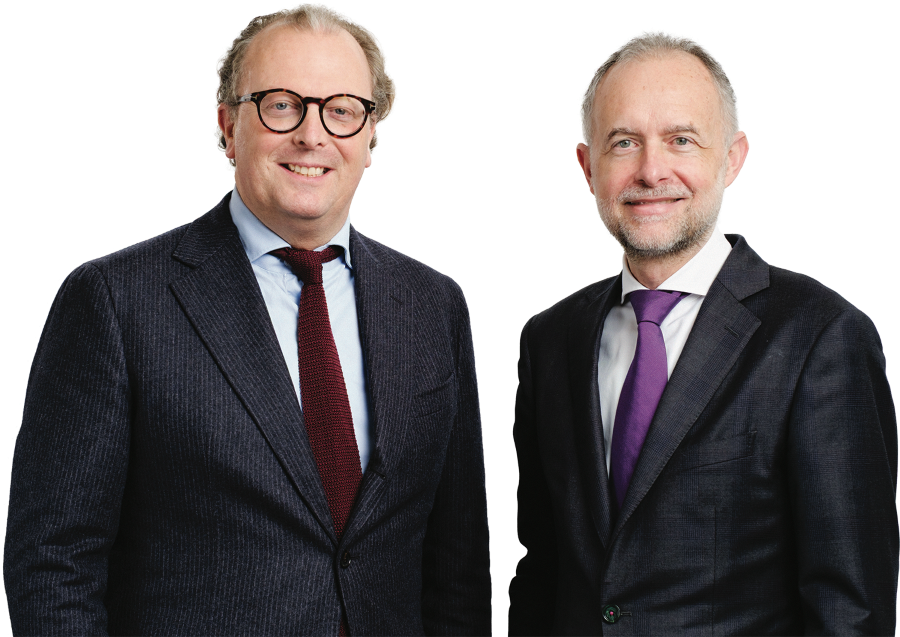
Johan Goossens – Country Manager Belgium
Steven Leeten – Voorzitter
|
|
|
02Zonnepanelen op de markt gebracht
Een decennium van producenten- verantwoordelijkheid
Tien jaar geleden sloten 92 bedrijven zich aan bij PV CYCLE Belgium. Vandaag zijn dat er 435 — een vervijfvoudiging die de groei van de Belgische zonne-energiemarkt weerspiegelt. Nieuwe spelers die panelen op de markt brengen, kiezen voor het collectieve systeem als de meest efficiënte manier om hun wettelijke verplichtingen na te leven. Zo groeit de groep van aangesloten bedrijven mee met de sector.
De evolutie van het aantal aangegeven panelen vertelt het verhaal van tien jaar zonne-energie in België: van een bescheiden start naar een periode van sterke groei, met een piek in 2023 en een correctie nadien. Die schommelingen zijn eigen aan de markt. Veranderingen in energieprijzen, fiscale maatregelen en de dalende kost van zonnepanelen hebben de voorbije jaren telkens een directe impact gehad op het installatieritme — en zullen dat ook in de toekomst blijven doen.
Nieuw in 2025: stekkerzonnepanelen
Sinds 2025 zijn plug-in zonnepanelen toegelaten op de Belgische markt. Deze systemen, die eenvoudig via een stopcontact worden aangesloten, maken zonne-energie toegankelijk voor een breder publiek.
De impact blijft voorlopig beperkt: in 2025 werden ongeveer 14.000 stekkerzonnepanelen aangegeven bij PV CYCLE Belgium. Van een echte doorbraak is nog geen sprake, maar ze illustreren wel hoe nieuwe, laagdrempelige toepassingen hun intrede doen in de markt.
|
|
|
03Operationele resultaten
Een performant inzamelnetwerk
Samen met onze partners bouwen we verder aan een fijnmazig netwerk voor de inzameling van afgedankte zonnepanelen. Eind 2025 telde PV CYCLE Belgium 102 inzamelpunten, verspreid over het hele land (62 in Vlaanderen, 38 in Wallonië en 2 in Brussel). Dat betekent een lichte groei ten opzichte van 2024. Deze inzamelpunten — vaak bedrijven uit de sector zelf — spelen een cruciale rol door plaats te bieden om kleine hoeveelheden panelen te ontvangen.
Voor grotere volumes, vanaf ongeveer 40 panelen, organiseert PV CYCLE Belgium een ophaling ter plaatse. Dit tweede kanaal blijft essentieel bij het ontmantelen van grotere installaties.
Opvallend in 2025 is de verschuiving in de inzamelstromen. Ongeveer 30% van de ingezamelde panelen werd via inzamelpunten aangeleverd, tegenover 70% via ophaling ter plaatse. Door beide inzamelkanalen complementair in te zetten, zorgen we ervoor dat afgedankte zonnepanelen efficiënt worden ingezameld — ongeacht volume of locatie — en hun weg vinden naar recyclage.
Inzamelpunten

Ingezamelde hoeveelheden: groei zet door
In 2025 zette de sterke groei van de ingezamelde hoeveelheden zich verder door. In totaal zamelde PV CYCLE Belgium 1.785 ton in, tegenover 1.491 ton in 2024. Daarmee bevestigt 2025 de duidelijke opwaartse trend van de voorbije jaren.
Deze evolutie wijst op de verdere ontwikkeling van een vervangingsmarkt. Steeds meer installaties bereiken het einde van hun levensduur en maken plaats voor efficiëntere systemen, zowel bij residentiële als grotere toepassingen. De stijgende volumes vormen dan ook een indicatie van wat de komende jaren mag worden verwacht.
Vlaanderen blijft het grootste aandeel vertegenwoordigen, maar ook in Wallonië en Brussel nemen de ingezamelde volumes toe. Zo groeit de inzameling geleidelijk uit tot een realiteit in heel België.
Verwerking door meerdere recyclagepartners
Een kwaliteitsvolle verwerking van afgedankte zonnepanelen blijft een cruciaal aspect van de producentenverantwoordelijkheid, waar PV CYCLE Belgium garant voor staat. In 2025 werden de ingezamelde panelen verwerkt door een combinatie van partners, met een belangrijke rol voor BNE Trading & Recycling en de combinatie Comet/Recma, aangevuld met andere verwerkers.
Door operationele moeilijkheden bij BNE werd op het einde van het jaar een beroep gedaan op bijkomende recyclagecapaciteit. Concreet werd samengewerkt met Galloo (Menen) en Mirec (Eindhoven). Deze partners maakten het mogelijk om alle ingezamelde zonnepanelen zonder onderbreking te blijven verwerken.
Een klein deel van de ingezamelde panelen bestaat uit CIGS-panelen, die een andere samenstelling hebben dan de klassieke silicium-panelen. Deze stromen worden verwerkt door Lohmann (Duitsland).
De spreiding over meerdere recyclagepartners illustreert het belang van flexibiliteit in een snel evoluerende markt en garandeert de continuïteit van de dienstverlening. Tegelijk toont ze aan dat er voldoende capaciteit en expertise aanwezig is om de groeiende stroom afgedankte zonnepanelen op te vangen.
In 2026 zal PV CYCLE Belgium de verwerkingsopdrachten opnieuw in de markt zetten via een offertevraag, met als doel te blijven rekenen op een stabiele, efficiënte en toekomstgerichte verwerking. Samen met onze partners zorgen we er zo voor dat afgedankte zonnepanelen op een kwaliteitsvolle manier worden gerecycleerd en hun materialen opnieuw worden ingezet in de economie.
.svg)
|
|
|
04Duurzaamheid
Van recyclage naar een meetbare impact
Duurzaamheid staat centraal in de missie van PV CYCLE Belgium. Door de correcte inzameling en recyclage van afgedankte zonnepanelen zorgen we ervoor dat waardevolle materialen opnieuw kunnen worden gebruikt, wat bijdraagt aan het verminderen van de milieu-impact.
In 2025 zette PV CYCLE een belangrijke stap in de professionalisering van zijn aanpak op het vlak van duurzaamheid. Er werden twee specifieke functies gecreëerd: een Sustainability & Regulatory Affairs Manager en een Circularity Manager.
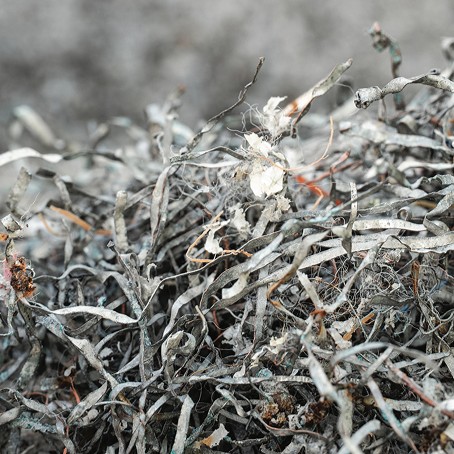
Er werd een materialiteitsanalyse uitgevoerd om de meest relevante duurzaamheidsthema’s voor onze activiteiten te identificeren. Daaruit blijkt dat circulariteit en klimaatverandering de belangrijkste prioriteiten zijn. Andere thema’s, zoals bedrijfsethiek, gegevensbescherming, gezondheid en veiligheid, verantwoordelijk beheer van de waardeketen en innovatie, worden ook opgevolgd.
De kern van de duurzaamheidsresultaten van PV CYCLE Belgium wordt uiteraard gevormd door de verwerkingsresultaten van de panelen. In 2025 bereikten de twee belangrijkste recyclagepartners — samen goed voor 93% van het totale volume — gezamenlijk een recyclagegraad van 85,9% en een valorisatiegraad van 96,6%. Dit betekent dat de grote meerderheid van de materialen op nuttige wijze wordt hergebruikt, hetzij als secundaire grondstoffen, hetzij via andere vormen van valorisatie.
De levenscyclusanalyse: een meetbare milieu-impact
Voor het eerst voerde PV CYCLE Belgium een levenscyclusanalyse (LCA) uit van zijn activiteiten. Deze analyse beoordeelt de milieu-impact van de inzameling en verwerking van afgedankte zonnepanelen, van de ophaling tot de verwerking en terugwinning van de materialen.
De resultaten bevestigen dat de georganiseerde inzameling en recyclage een netto milieubaat opleveren. Voor elk kilogram verwerkt kristallijn siliciumzonnepaneel wordt gemiddeld 1,4 kg CO₂-equivalent vermeden. Vertaald naar de totale Belgische stroom in 2025 vertegenwoordigt dit meer dan 2.327 ton CO₂-equivalent(wat overeenkomt met de uitstoot van 660 personenwagens die elk 15.000 km per jaar rijden).
Omgekeerd blijven de emissies die verband houden met de werking van het systeem zelf duidelijk beperkter. De emissies als gevolg van de inzameling en de eerste verwerkingsstap bedroegen in 2025 75,4 ton CO₂-equivalent. De dankzij de recyclage vermeden emissies zijn dus ruimschoots hoger dan de door de logistiek en verwerking gegenereerde emissies.
De analyse brengt ook positieve effecten in andere domeinen aan het licht. De terugwinning van materialen zoals aluminium, koper en glas bespaart primaire grondstoffen en fossiele energie. Een voordeel wordt waargenomen in alle impactcategorieën die doorgaans deel uitmaken van een LCA.
De levenscyclusanalyse zal in 2026 afzonderlijk worden gepubliceerd.
|
|
|
05Communicatie
Tien jaar PV CYCLE Belgium is ook tien jaar bouwen aan bewustzijn, met doeltreffende communicatie-acties.
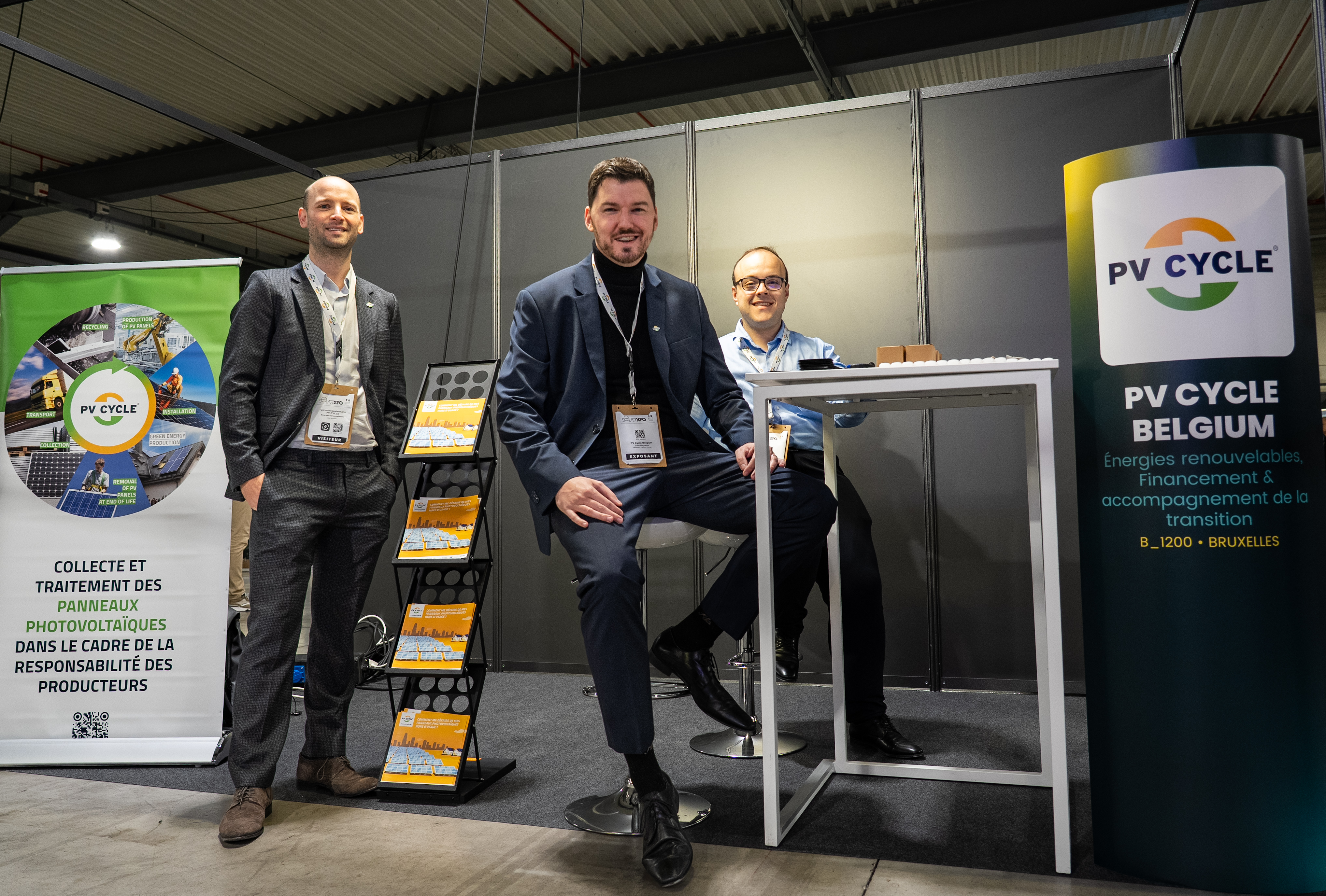
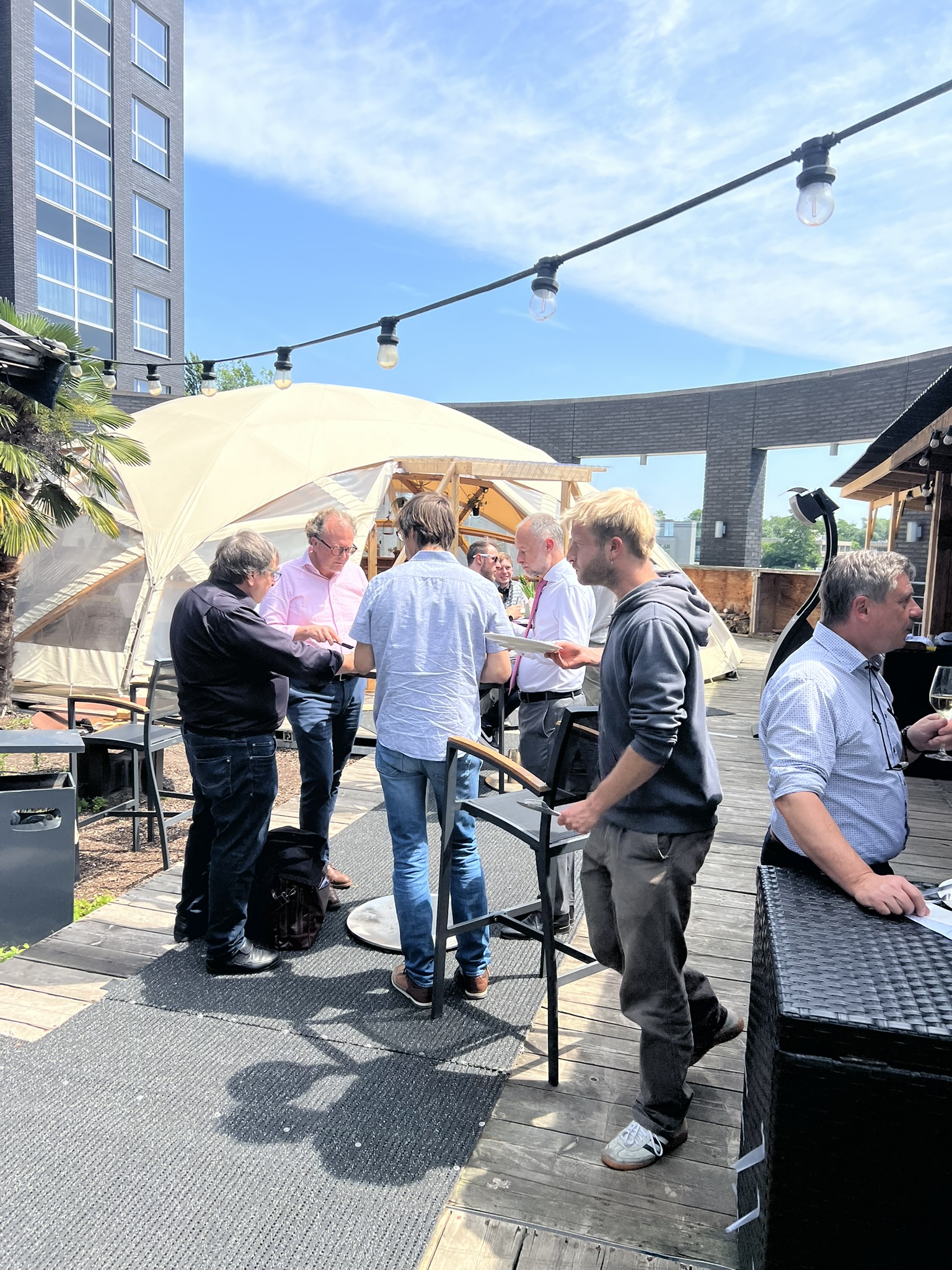
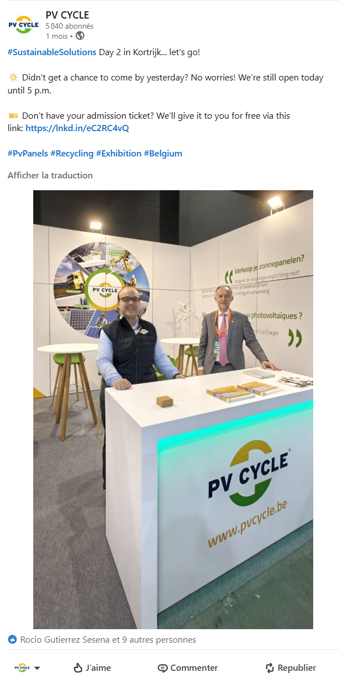
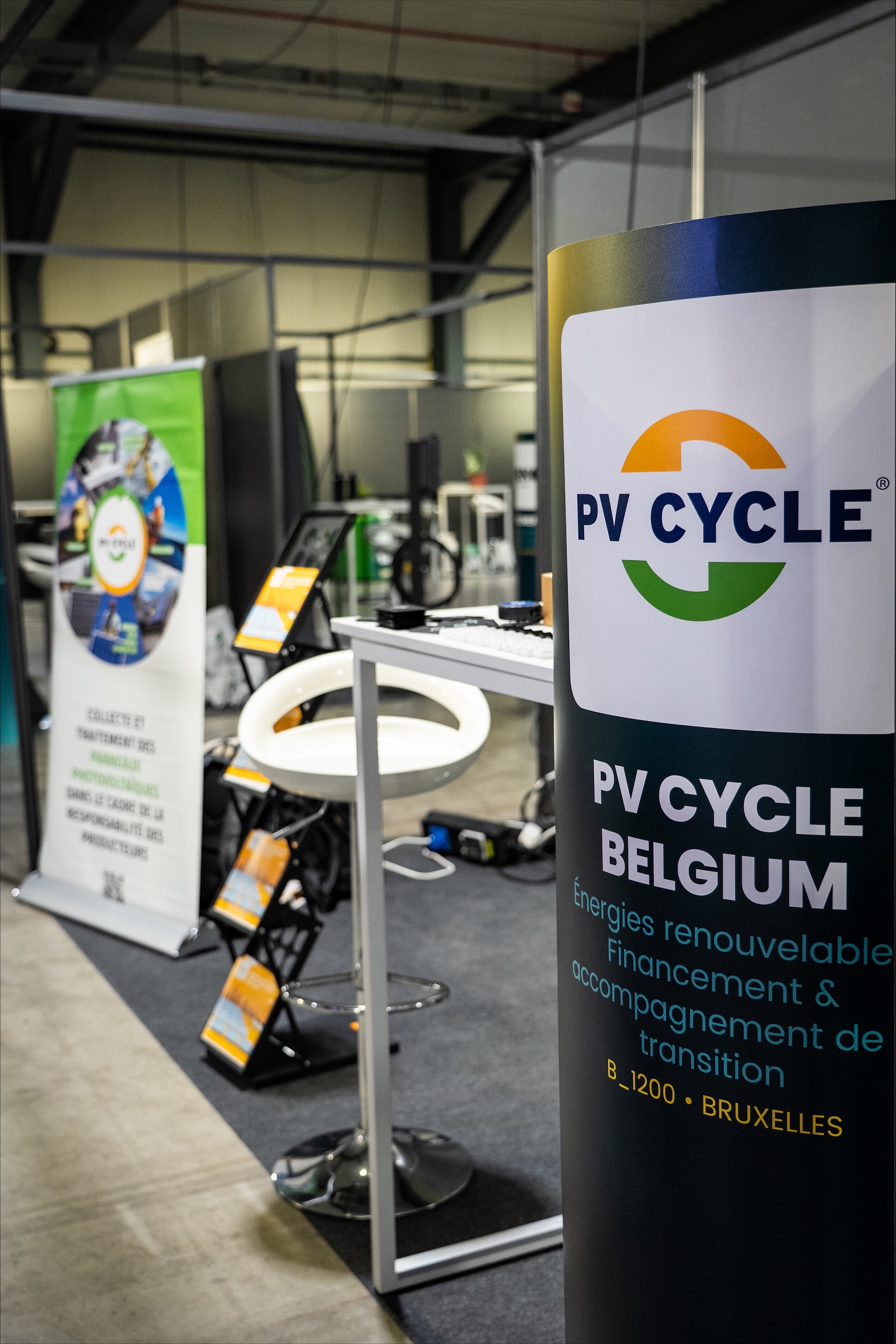
In 2025 was PV CYCLE Belgium opnieuw aanwezig op de belangrijkste vakbeurzen van de sector: InterSolution in Gent, Solar Solutions in Kortrijk en Solar XPO in Marche-en-Famenne. Die directe aanwezigheid blijft essentieel — het is op de beursvloer dat gesprekken ontstaan, vragen beantwoord worden en nieuwe bedrijven de stap zetten naar aansluiting.
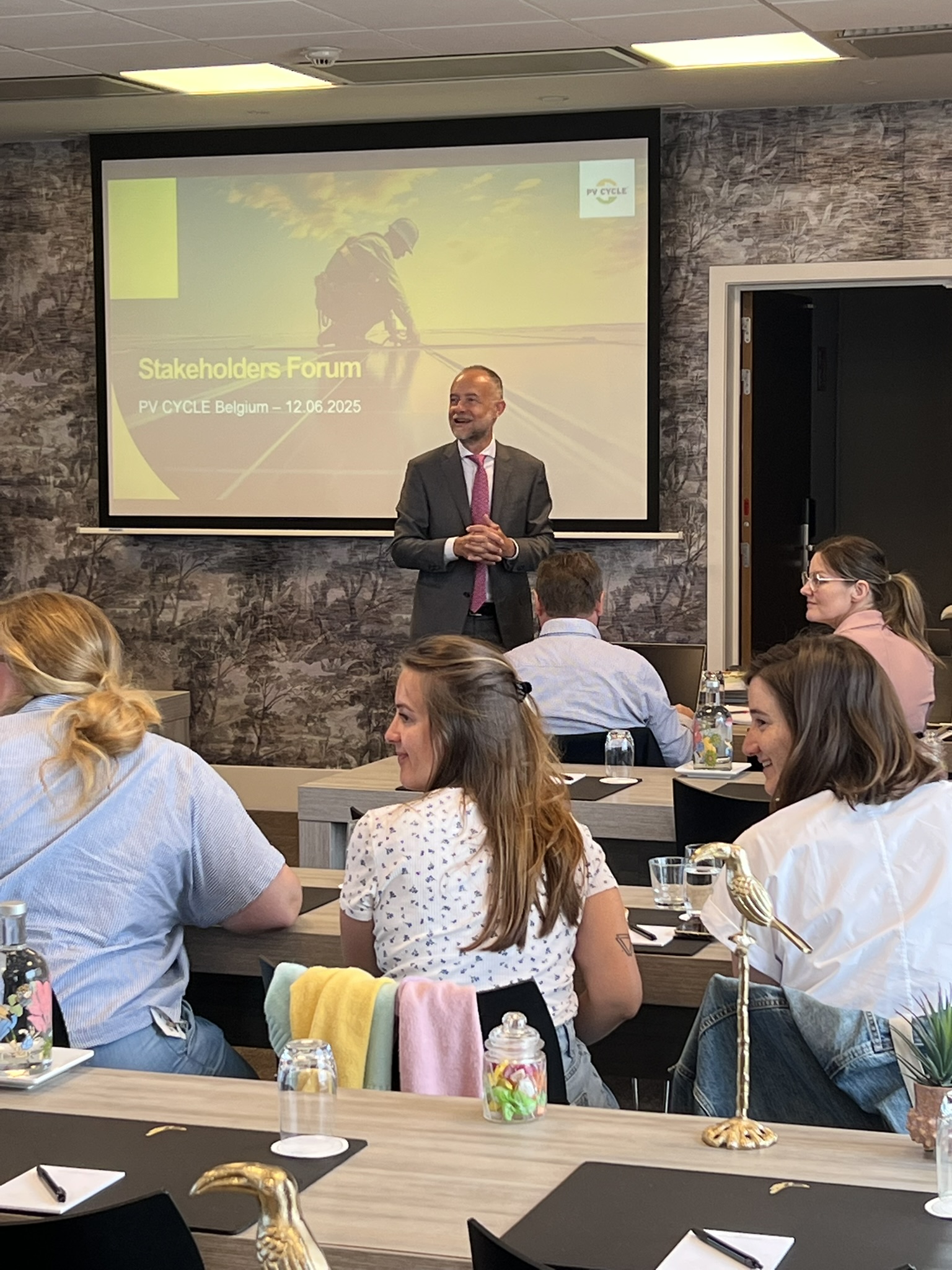
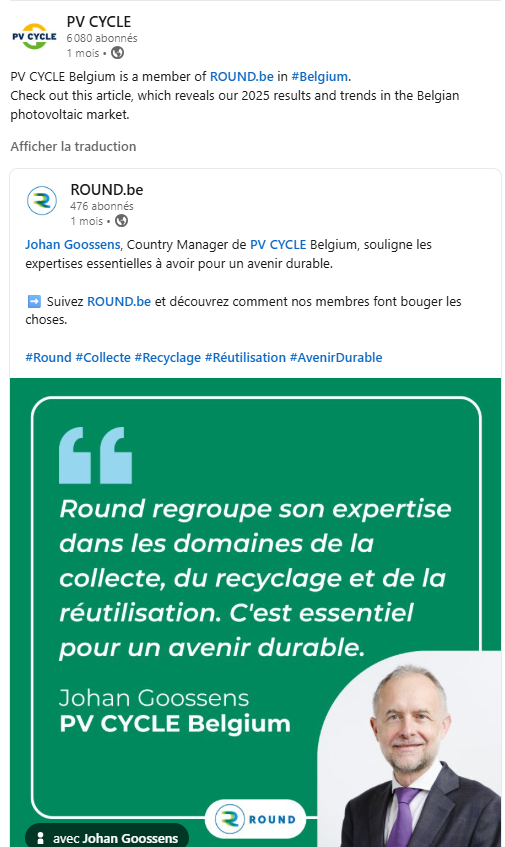
Daarnaast werd verder ingezet op gerichte communicatie via gespecialiseerde vakmedia, conferenties en eigen digitale kanalen, met een regelmatige nieuwsbrief en een LinkedIn-aanwezigheid die jaar na jaar groeit. Ook de tweede editie van het stakeholderforum, met deelnemers van aangesloten bedrijven, federaties, overheden en operationele partners, was een succes.
Regelmatige communicatie wordt de komende jaren alleen maar belangrijker. De verwachte sterke stijging van afgedankte panelen vraagt om een maximale inzamelgraad — en dat lukt alleen als elke schakel in de keten zijn rol kent en opneemt. Voor fabrikanten en invoerders betekent dit een gelijk speelveld: wie panelen op de markt brengt, draagt bij aan de recyclage ervan. Voor particulieren en professionals betekent het dat ze de weg vinden naar de juiste inzamelkanalen.
Tien jaar gerichte communicatie heeft daarvoor een stevige basis gelegd. Samen met onze partners blijven we die verder versterken, zodat ook de groeiende volumes van morgen op een doeltreffende manier worden ingezameld en verwerkt.

|
|
|
06Financiële kerncijfers
De financiële resultaten van PV CYCLE Belgium weerspiegelen de evolutie van de markt. In 2025 bedroegen de ontvangen milieubijdragen 3,5 miljoen euro, tegenover 3,9 miljoen euro in 2024. Deze daling volgt de terugval in het aantal op de markt gebrachte zonnepanelen en bevestigt de volatiliteit die eigen is aan de sector. De bijdrage per paneel bleef daarbij ongewijzigd.
Tegelijk namen de operationele kosten toe. De kosten voor inzameling en verwerking stegen tot 313.000 euro, in lijn met de groei van de ingezamelde volumes en als gevolg van hogere verwerkingskosten per ton. Ook de beheerskosten namen toe tot 430.000 euro, onder meer door de verdere professionalisering en extra inspanningen op het vlak van communicatie.
Het financiële model berust op een langetermijnbenadering, waarbij de milieubijdragen niet onmiddellijk worden besteed, maar deels worden gereserveerd als provisie voor toekomstige kosten. In 2025 werd 3,1 miljoen euro toegevoegd aan deze voorzieningen. Deze middelen zijn essentieel om de inzameling en verwerking van zonnepanelen te kunnen financieren wanneer de huidige installaties het einde van hun levensduur bereiken.
| 2024 (K EUR) |
2025 (K EUR) |
|
|---|---|---|
| Opbrengsten | ||
| Milieubijdrage | 3 908 | 3 488 |
| Kosten | ||
| Beheerskosten | 286 | 430 |
| Operationele kosten (inzameling en verwerking) | 267 | 313 |
| Voorzieningen | ||
| Voorzieningen voor toekomstige kosten | 5 358 | 3 140 |
|
|
|